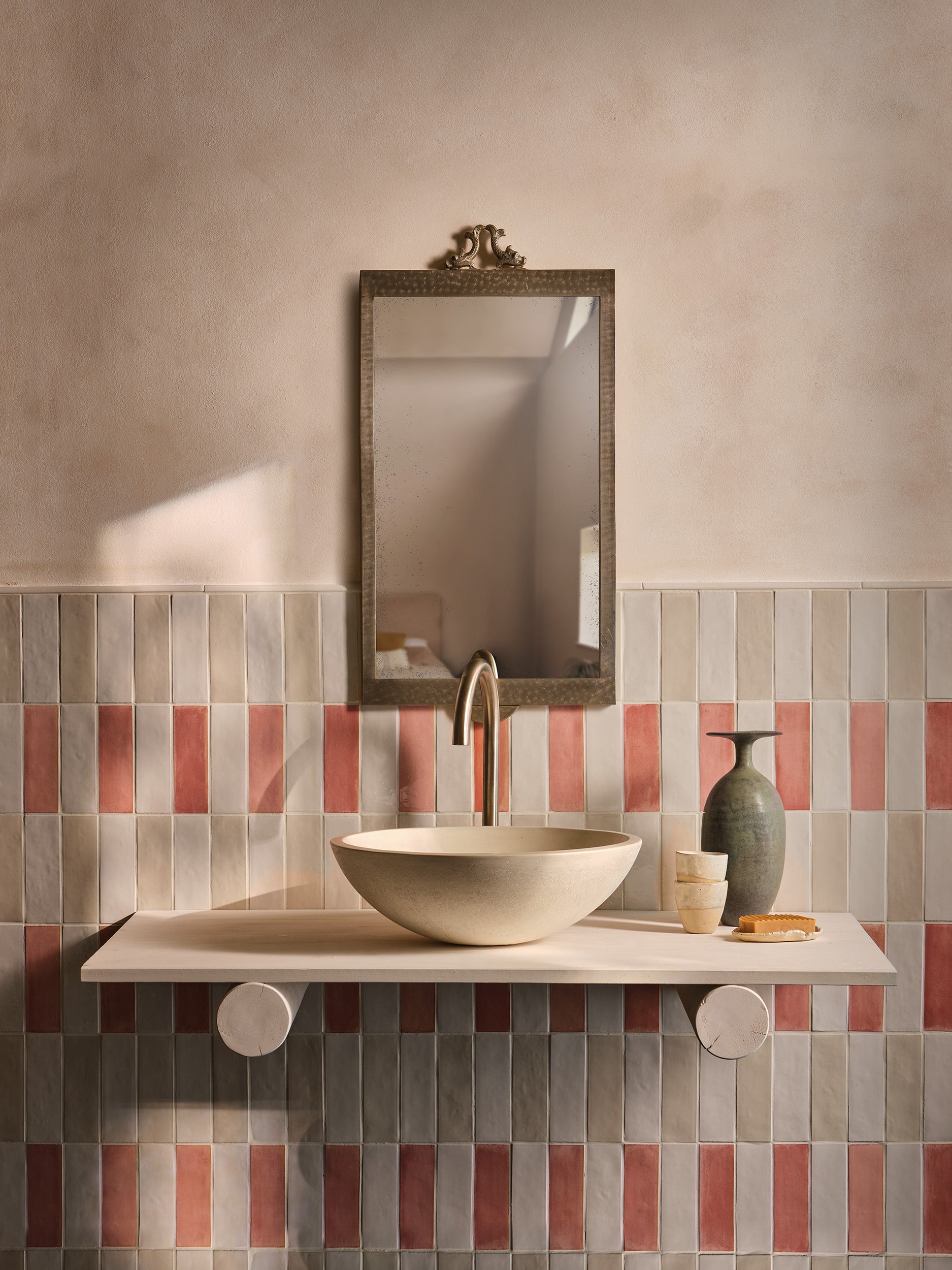
Creating European-Inspired Interiors with Herringbone Tile
Some patterns feel decorative. Others feel architectural. Herringbone tile delivers a unique combination of both.
Herringbone makes a room feel timeless, layered, and quietly luxurious — all without trying too hard. It exudes a sense of old-world craftsmanship combined with modern allure, and it’s a kind of European tile design that stands the test of time, which is to say it’s constantly current without being flashy or trendy.

The versatility of herringbone tile is also a big part of its appeal, as there really is no space where it doesn’t make sense.
A herringbone tile layout can be crisp and clean in a contemporary kitchen, soft and romantic in a spa-inspired bathroom, or richly atmospheric in a main living area. It can also hold court in outdoor living spaces — from decks to patios and poolside lounges. Depending on the tile material, color, and finish, the same pattern can read restrained, rustic, polished, or deeply expressive.
What Makes Herringbone Tile So Enduring?
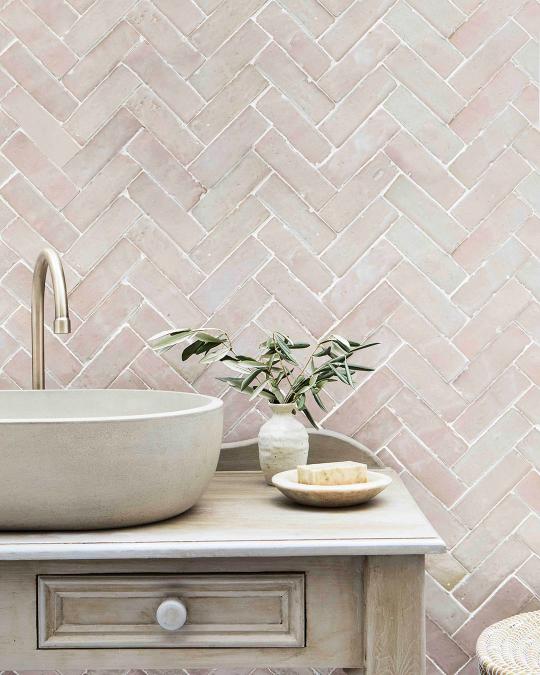
A common misconception about herringbone tile is that it’s a tile shape. However, it’s actually a layout pattern created when rectangular tiles are arranged in a staggered, V-shaped zigzag resembling herring bones.
The pattern has been used for centuries, with roots dating back to the Roman Empire, where it was used in brick roadways and buildings. In the 16th-century Renaissance era, the zigzag motif moved inside as wood parquet flooring in luxurious French châteaux and other fine European estates and palaces.
To this day, designers and homeowners keep returning to herringbone because it gives a surface movement and rhythm — but not distraction or noise. It creates direction, but not rigidity. That balance is powerful in interior design, especially when the goal is to evoke a sense of heritage or a French-inspired finish that feels elegant and refined. But herringbone feels equally at home in a more contemporary space, too.
Herringbone vs. Chevron: What’s the Difference?
Herringbone and chevron are often confused, but they are not the same. Herringbone uses rectangular pieces arranged in a broken zigzag, while chevron is cut so the ends meet in a continuous V shape.
That small difference changes the entire feeling of the surface. Herringbone feels more relaxed, a little more textural, and often more traditional. Chevron reads more graphic and precise.
For European-inspired interiors that are meant to feel warm, collected, and layered, herringbone is often the better fit. It often comes across as less rigid and trendier than chevron, and that softness is well served in European tile design, where elegance is often achieved through a quieter sense of restraint.
Why Herringbone Feels European
The most memorable European interiors are about layers, materials with rich depth and quality, details that feel storied and refined. Herringbone fits this language beautifully.
It has visual history and European roots, but it also has a modern sense of movement that keeps it from feeling static. In a kitchen, it can soften hard lines. In a bathroom, it can introduce a tailored, almost hotel-like elegance. In a hallway or entry, it can make the floor feel like part of the architecture rather than an afterthought.
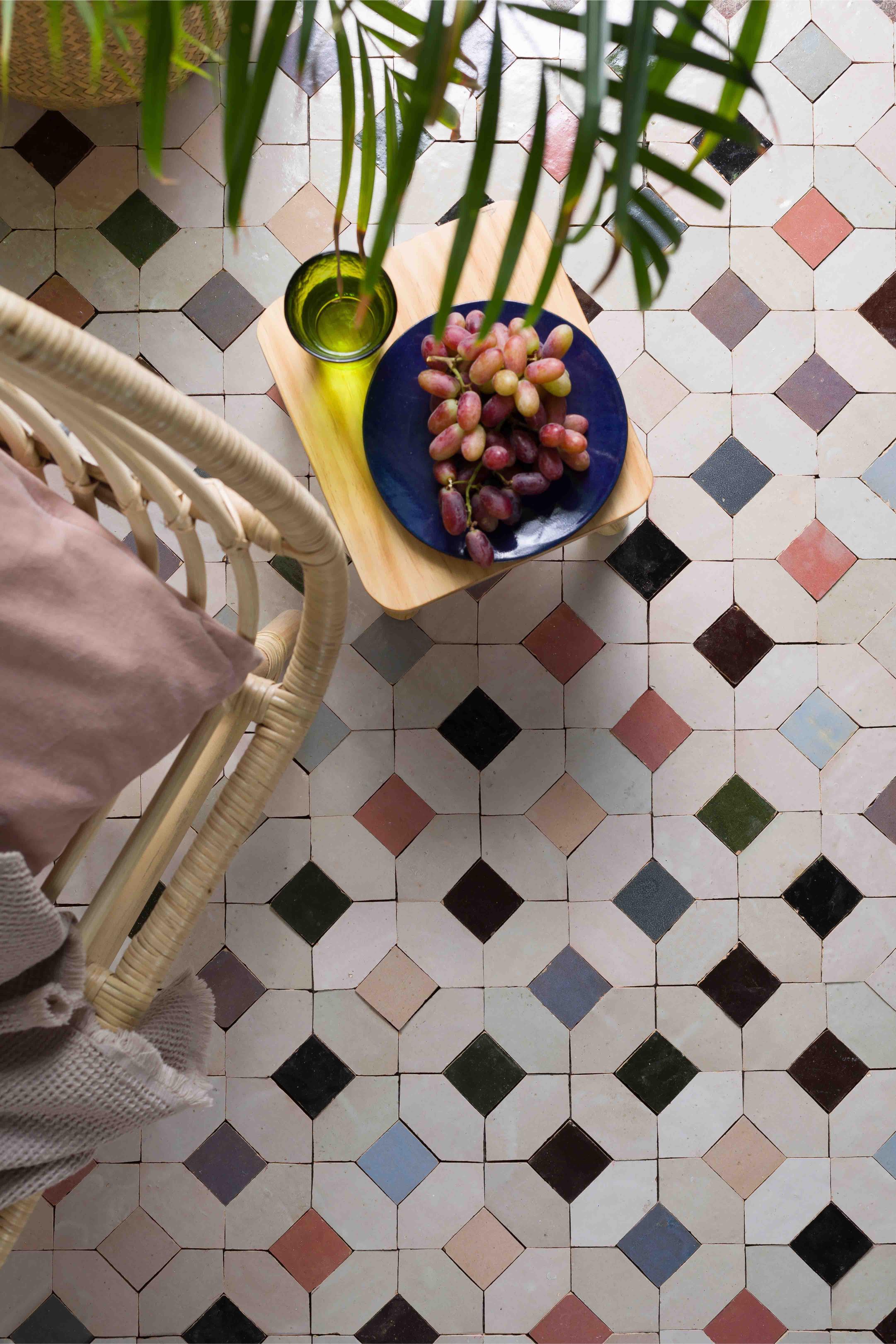
Part of the European appeal also comes from materiality. Otto Tiles & Design offers herringbone across different materials and collections, including cement, ceramic, and bejmat zellige, so the same pattern can lean more organic, more polished, or more artisanal depending on the selection.

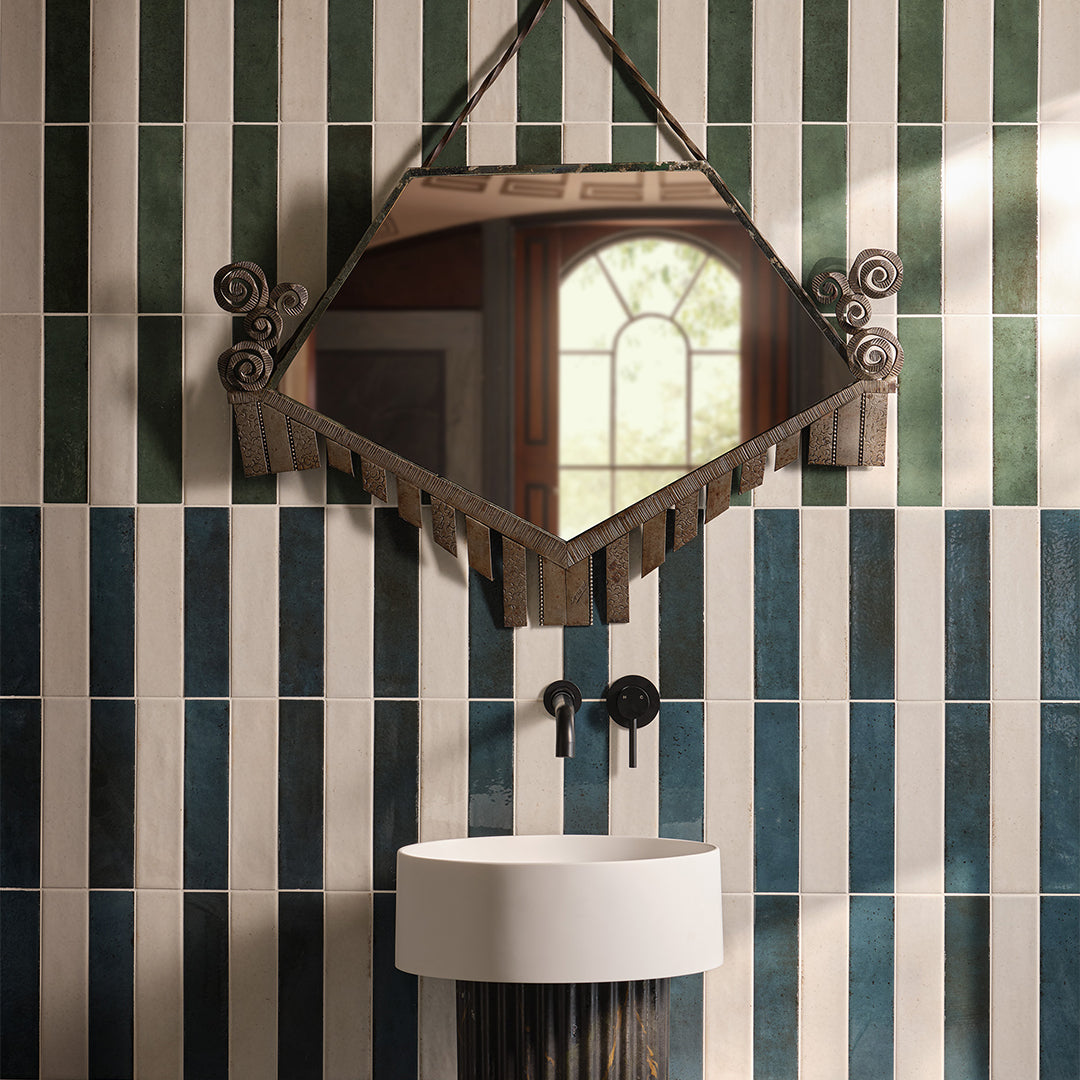
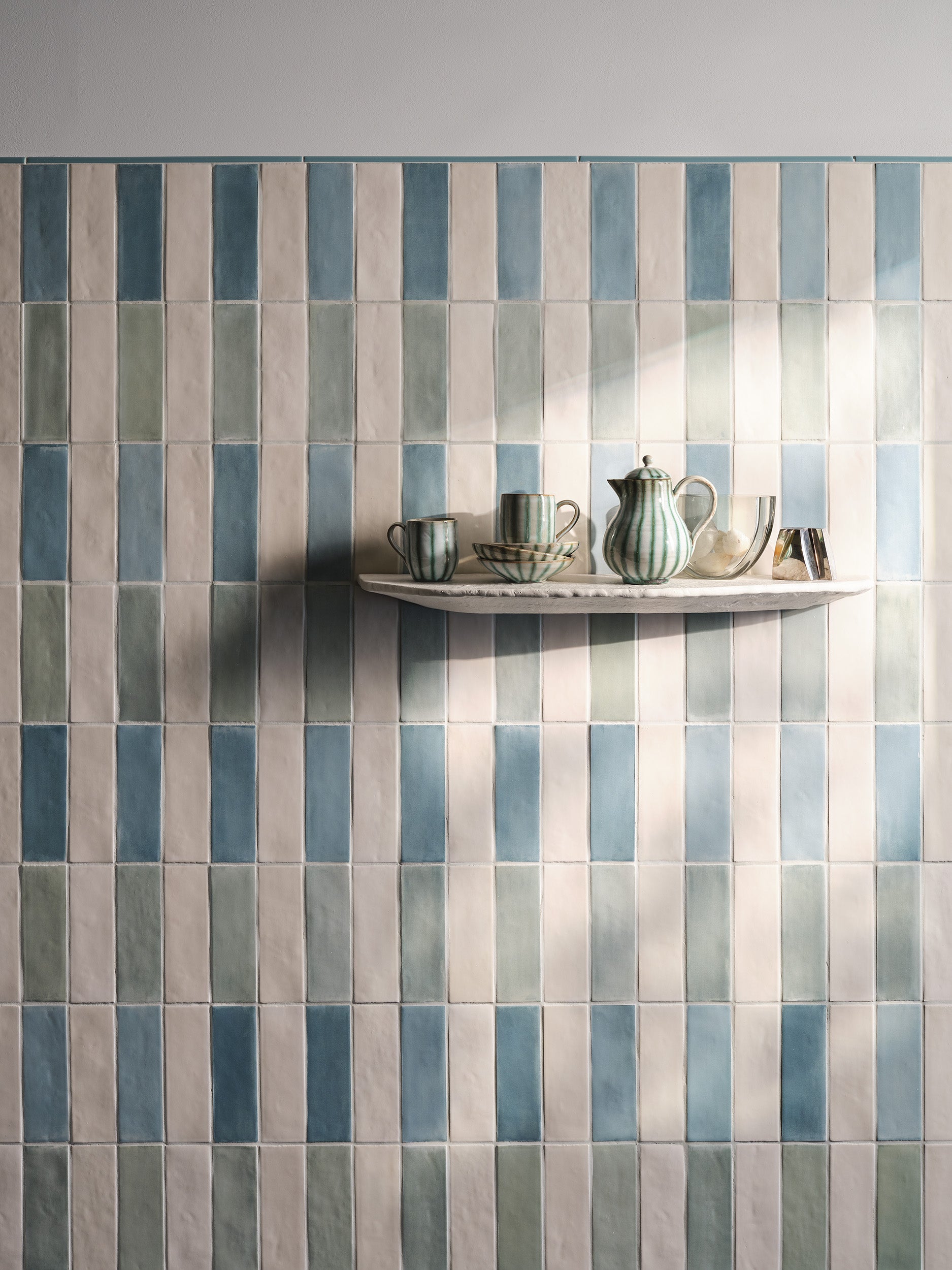
For a more rustic French-inspired interior, many designers gravitate toward softer neutrals, aged whites, warm stones, or subtle greens and blues. For a moodier, more dramatic European look, deeper navy, charcoal, or dark green can give herringbone a richer, more layered feel.
Herringbone Matte vs. Glossy Styles
The finish of herringbone tile changes its style language.
A matte herringbone tile usually feels quieter, more contemporary, and a little more grounded. It can soften the geometry of the pattern and is often a good choice when you want the room to feel calm, understated, or architecturally crisp.
Glossy herringbone, by contrast, catches light more significantly. It can make a backsplash feel brighter and more reflective, which is especially coveted in smaller kitchens or bathrooms where you want the tile to add a bit of sparkle. In a European-inspired interior, glossy tile can feel elegant and slightly more formal, while matte tile often feels more modern and subdued.
The best choice usually depends on the room, the mood, and your personal aesthetic. A kitchen with abundant natural light may welcome a glossy backsplash. A moody powder room or serene bath may look better in matte.
Where to Use Herringbone Tile
The beauty of herringbone is that it flaunts both form and function. It can sit pretty as a statement wall or earn its keep in a hard-working shower, backsplash, or floor. Depending on the tile material, herringbone is also commonly used in outdoor applications like patios, pool areas, and outdoor dining spaces.
So, the best rooms for herringbone tile? Any room! You’re only limited by your imagination. Here are a few of the most common places to use the tile.
For bathroom herringbone tile ideas, the pattern works especially well in showers and on vanity walls and floors. On a shower wall, it adds movement and a sense of polish. On a bathroom floor, especially in a softer neutral or stone-inspired color, it can feel classic and peaceful.
There are so many kitchen herringbone backsplash ideas, too, because a herringbone tile backsplash is one of the easiest ways to introduce interest without overwhelming the room. It feels familiar enough to be approachable, but the pattern gives a more bespoke look than a standard subway layout. A white or cream herringbone backsplash can brighten the room, while a darker or more saturated color delivers a dramatic, tailored quality.
And when it comes to flooring (either indoors or outdoors), herringbone tile makes an impact, automatically adding a rush of storied allure or European refinement to the room. When it comes to a grand foyer with a herringbone floor, that sets the stage for a strong, directional design language from the front entrance, marking the pace for the rest of the home.
Other ideas for placements include things like a fireplace wrapped in herringbone, which can become a focal point in the room.
Selecting the Best Herringbone Tile Colors for Your Space
Even while the herringbone pattern remains the same, the look of the tile can change significantly based on its color. The pattern has already created movement, so the color choice determines the expression, whether that movement feels subtle and quiet or bigger and bolder.
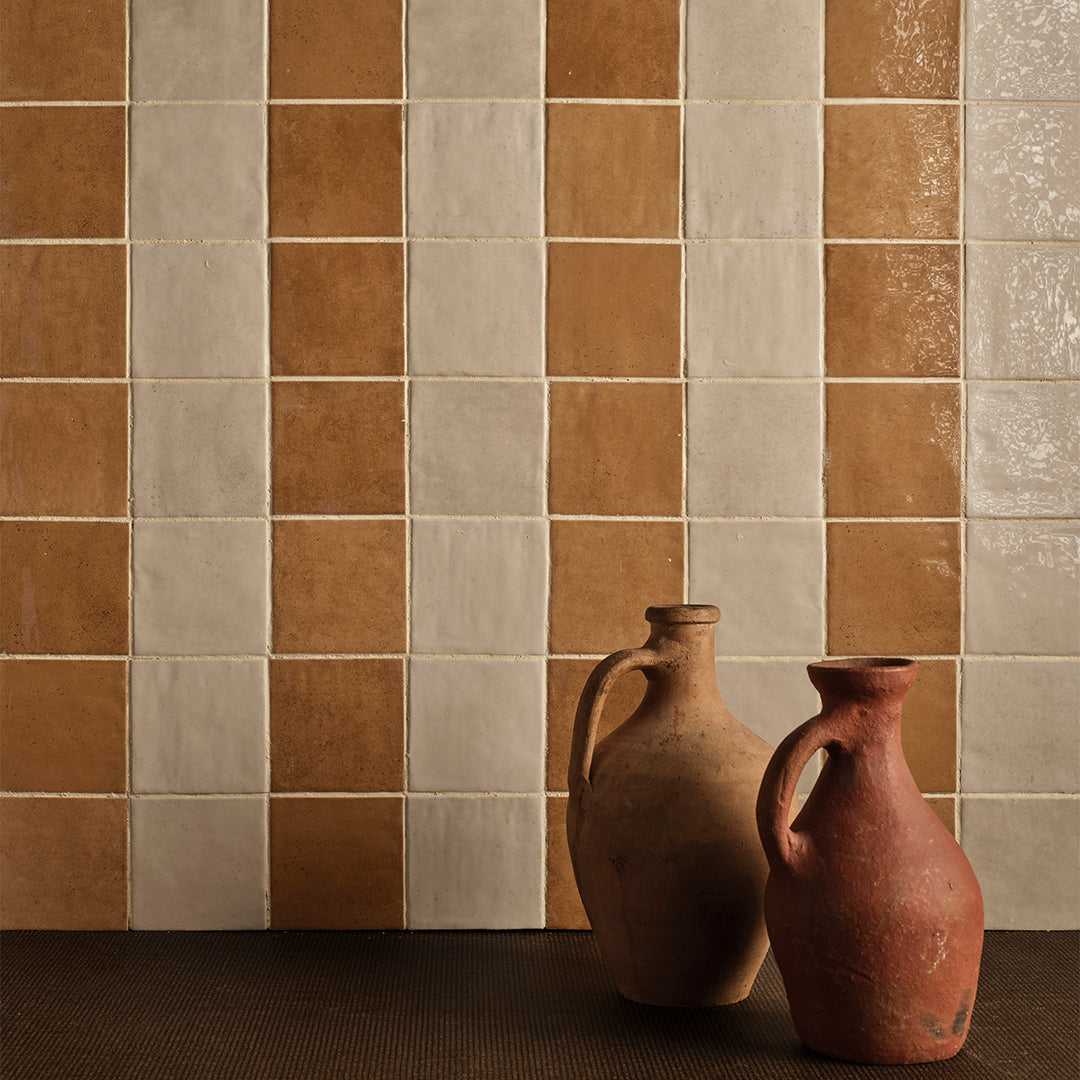
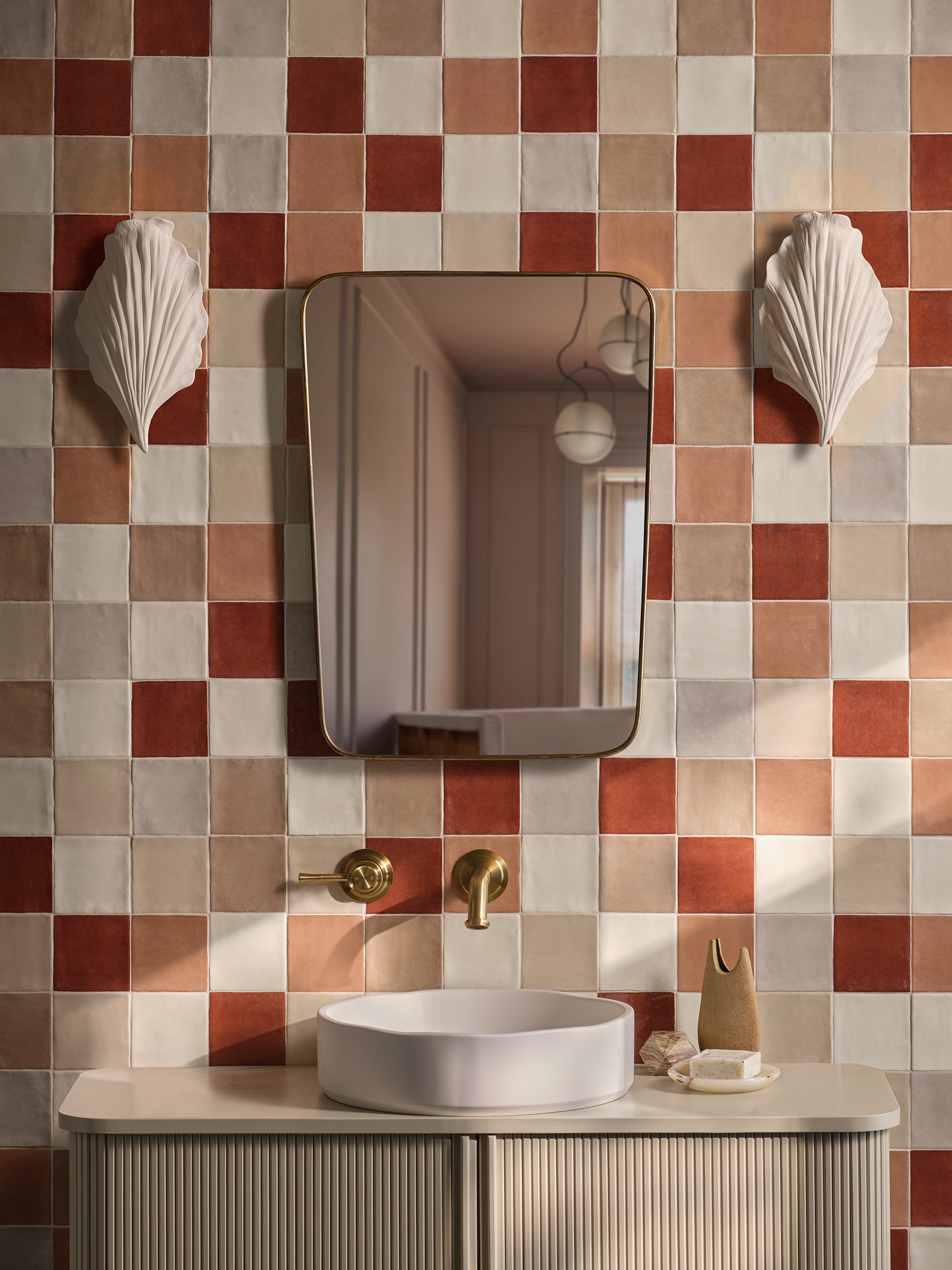
Soft neutrals are an excellent choice when you want the herringbone tile to support the room rather than command attention, as in a pared-back kitchen or a serene bathroom. These shades also work beautifully in European-inspired spaces.
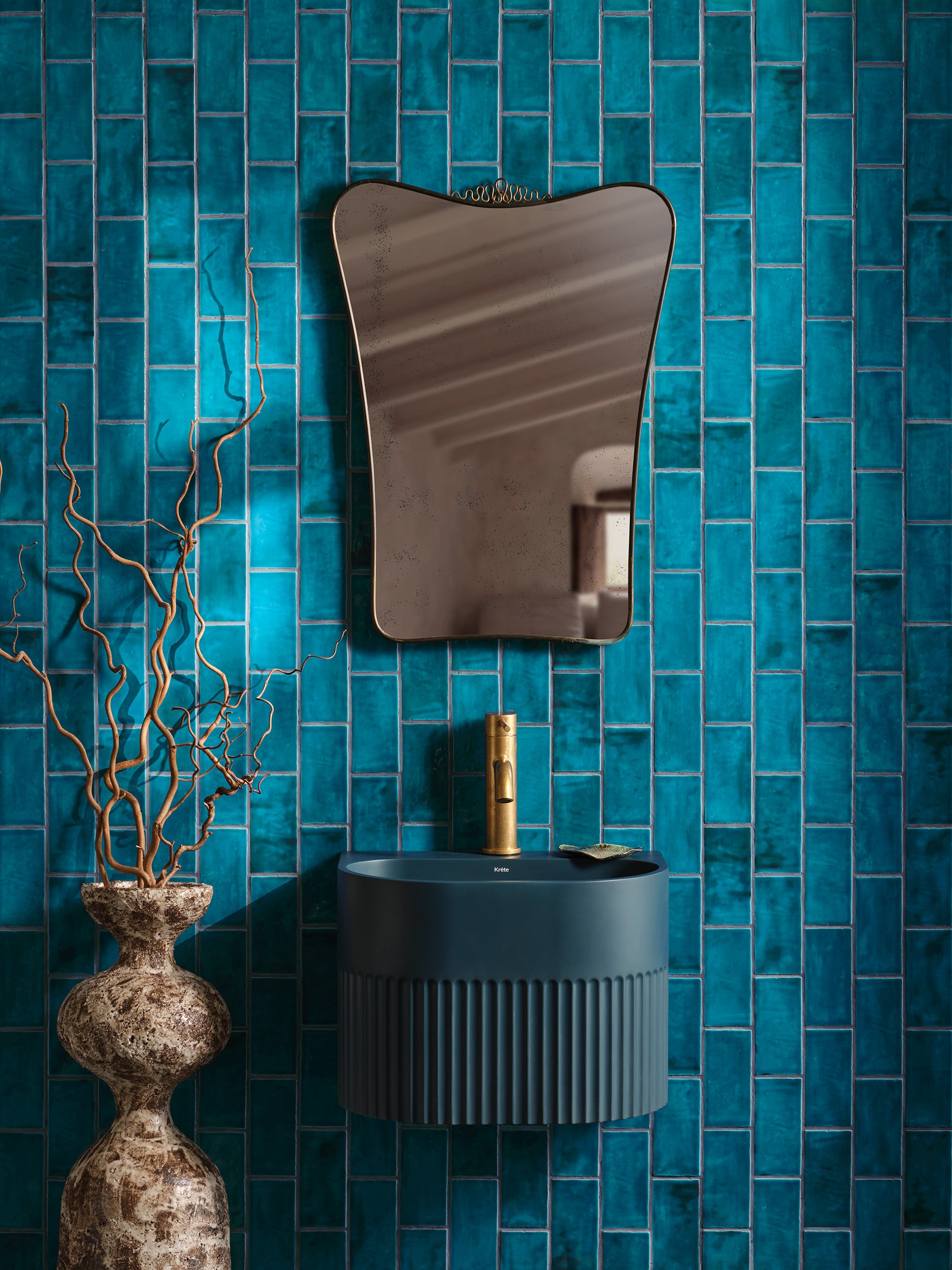
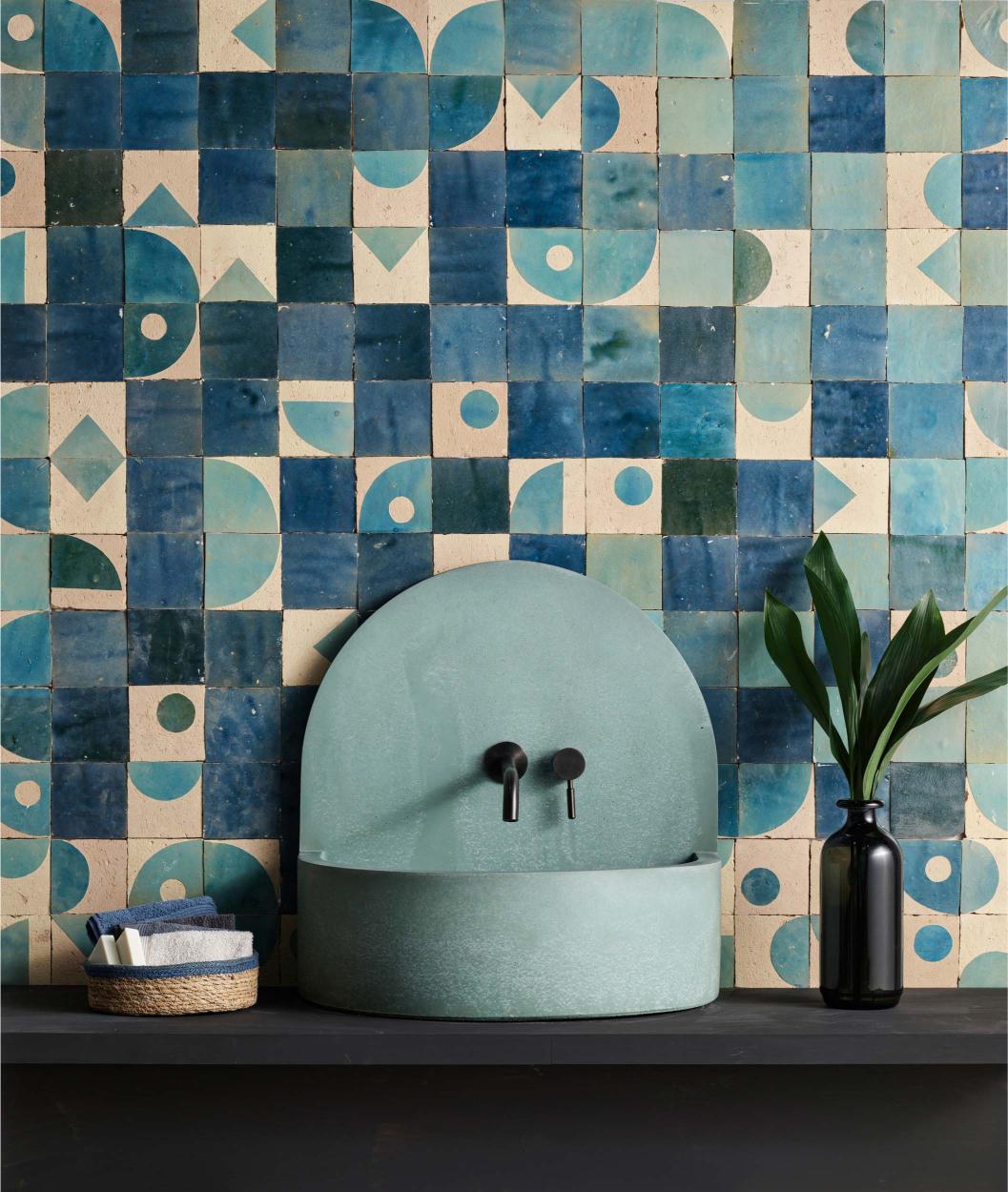
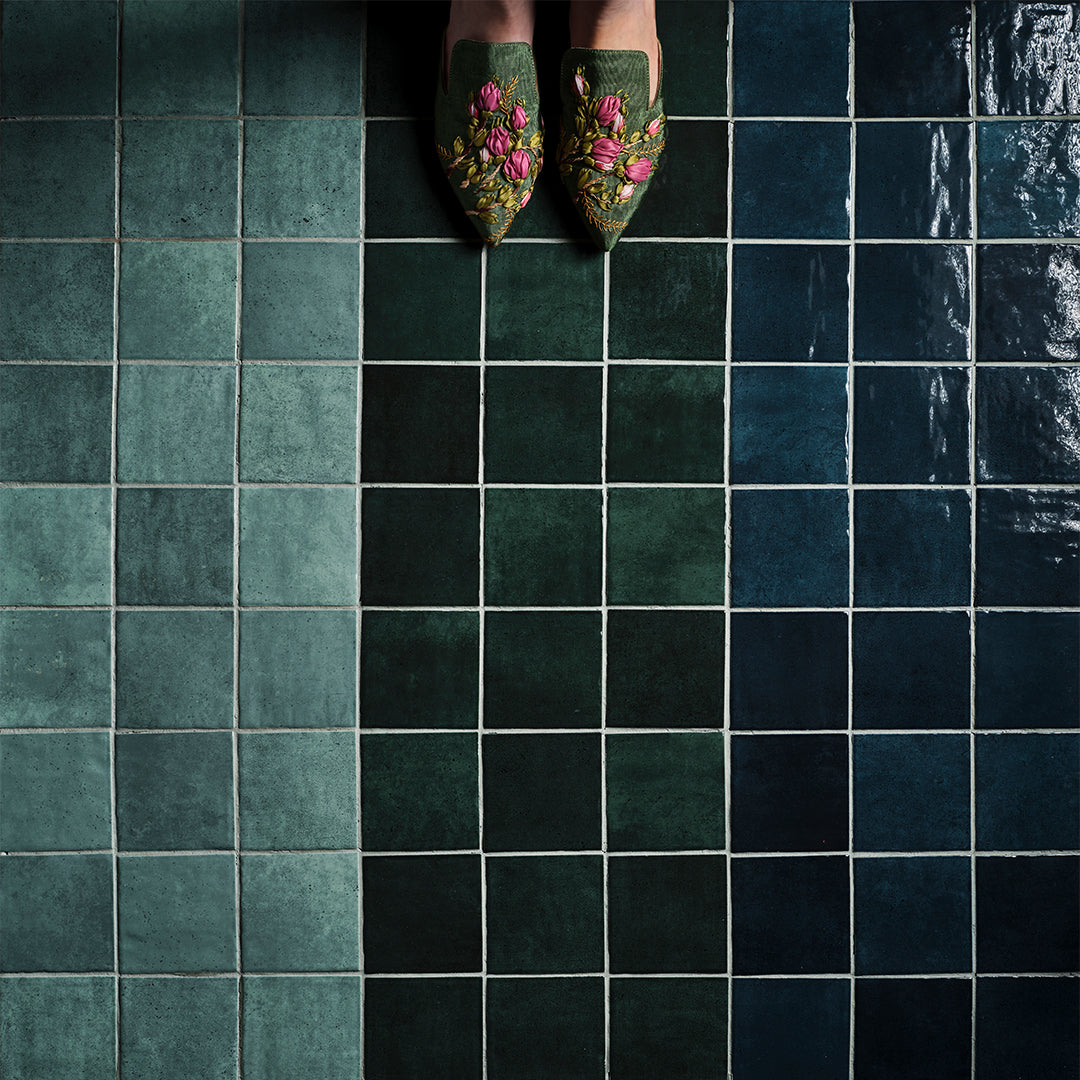
Colors like greens and blues bring an entirely different mood. They are richer and more enveloping, which makes them well-suited to jewel-box bathrooms, dramatic powder rooms, and kitchens that are meant to bring a little dose of drama. Darker tones can also make the zigzag pattern feel more subtle, especially when the grout is closely matched.
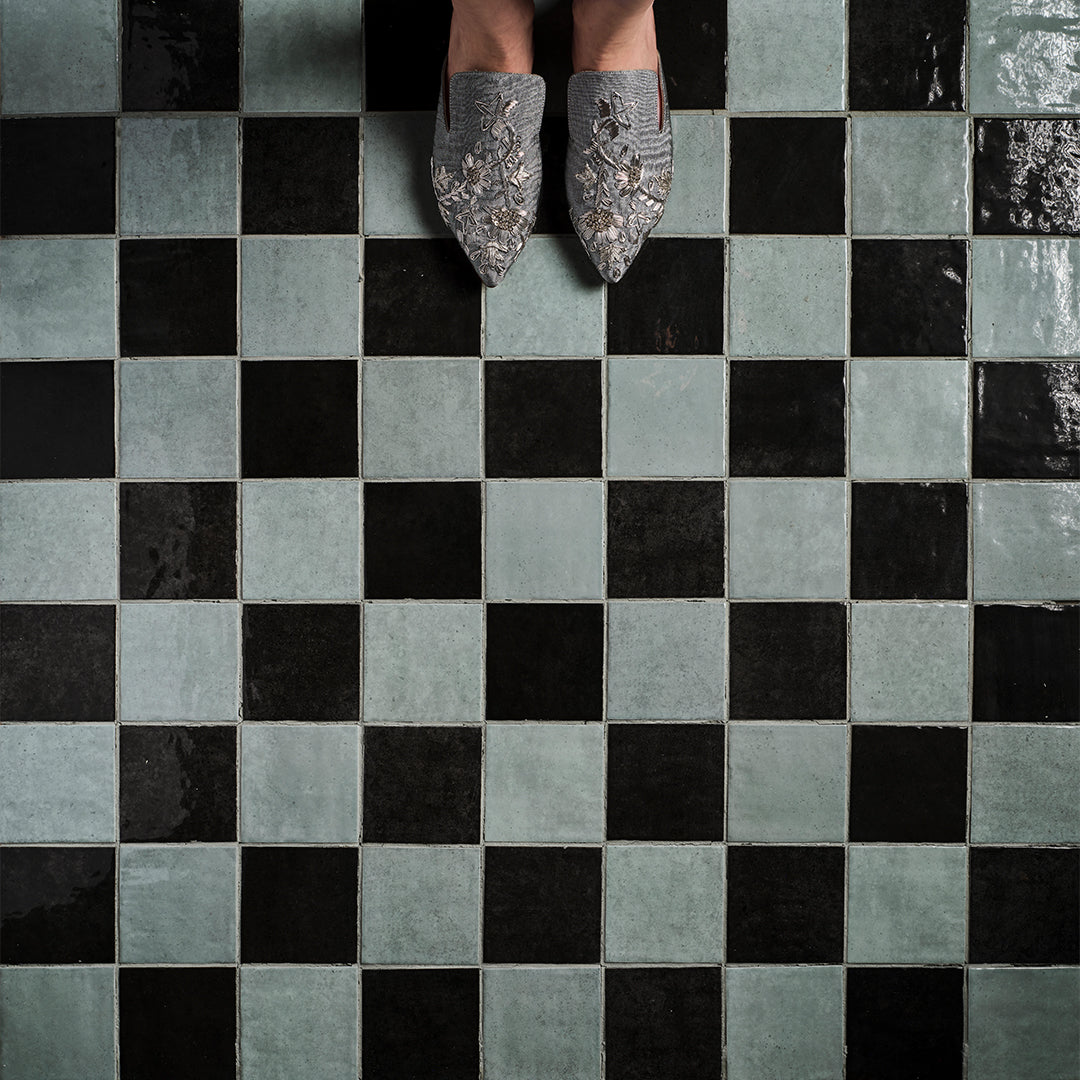
Gray tones are especially useful when the goal is a more architectural look. They can bridge modern and classic interiors, making them a strong choice for those who want something elegant but not overly traditional.
Choosing DIY or Professional Installation
Here’s the important thing to keep in mind when evaluating the installation of herringbone tile: It can be installed by an experienced DIYer, but the caveat is that it’s not the most forgiving weekend project.
For DIY installation, the key is both skill and discipline. Measure carefully, check the centerline, dry lay the tiles, and do not rush the first row. Once the pattern is established, small mistakes become much harder to ignore. That’s one reason herringbone is often considered a more advanced layout than straight-set tile.
When the tile itself is handmade, as with Otto’s herringbone options, the need for a skilled installer becomes even more important. Handmade tile varies in size and shape, which adds to its character but also requires experienced installation techniques.
So, homeowners often hire a professional installation team to ensure the best outcome, given the level of care and precision the pattern requires. At Otto Tiles & Design, we help many homeowners find an expert installer in their area who specializes in the selected tile and herringbone pattern.

How to Clean Herringbone Tile
Herringbone does not require complicated care, but it does best with thoughtful maintenance.
While some cleaning and maintenance protocols depend on the tile material, in general, use a mild pH-neutral cleaner, avoid bleach and vinegar, and stay away from abrasive tools that could damage the tile’s surface. For showers, squeegeeing after use helps reduce limescale and soap scum buildup.
Some tiles, like encaustic cement tiles and unglazed zellige, will also require periodic sealing for best results.
Why Is Herringbone So Expensive?
Herringbone tiles are often considered luxury tile patterns and can be more expensive for several reasons, as they require a unique combination of additional materials, labor, and precision.
From an installation standpoint, because the pattern requires angled cuts and more pattern matching than a straightforward layout, it typically demands more time from the installer. More time means more cost.
Herringbone installations also usually require 10% to 15% more tile because of cuts and pattern matching, which is another reason the finished project can cost more than a simpler layout.
There is also the issue of skill. Herringbone is forgiving in some ways, but only when it is laid out well. A small error at the starting point can ripple across the entire surface, which is yet another reason why more experienced installation often comes with a higher price tag.
In other words, part of what you are paying for is the visual precision that makes herringbone look so effortless.

Where to Buy Herringbone Tile
With herringbone tile, quality counts, especially when creating a living work of art and a beautiful, long-lasting result. That’s why it’s so important to get your herringbone tile from the best source with the biggest, most inspired collection.
As an international brand known for its high-quality, high-style selection of cement tile, Otto Tiles & Design elevates modern artisan craftsmanship with an innovative, design-forward approach. In addition to statement-making herringbone tiles, you can find other artisan tiles online and in Otto’s showroom in Miami, Florida.
Otto’s current herringbone collection includes a curated mix of colors and materials, from neutrals like Dirty White, Cream, Peanut, and Egg Shell to saturated Bosco Green and Navy Blue, as well as grays like Elefante and Shark Grey.
You can also create your own herringbone pattern with Otto’s zellige bejmat tiles — another ideal choice for walls, floors, indoor and outdoor use, and wet areas. These colors make it easy to tailor the look to a specific project, whether the goal is European-inspired elegance, quiet minimalism, or something richer and more dramatic.
The Lasting Appeal of Herringbone
The reason herringbone tile keeps showing up in thoughtful interiors is not that it is trendy, but rather that it’s adaptable. It can be soft or striking, old-world or modern, restrained or expressive. It can warm up a room without taking center stage. It can add history without feeling heavy. And in the right material and color, it can make even the most practical surface feel beautifully composed.
That is what makes herringbone such a strong starting point for European-inspired interiors. It is more than a pattern. It is a point of view.